


Last year, a frantic client came to me with a serious issue. They had a list of 50,000 subscribers, excellent copy, and a great product, yet their open rates had plummeted to 12%. They blamed the subject lines. After auditing their setup and implemented some strategies, I realized their previous email provider had poor sender reputation management. We switched them to a platform with stricter authentication protocols, and within two weeks, open rates stabilized at 35%.
That experience highlighted a critical truth: email marketing is no longer just about writing a nice newsletter. It is about deliverability, hyper-personalization, and AI-driven integrations.
With Google and Yahoo tightening their sender requirements significantly, the tool you choose determines whether you land in the Primary Inbox or the Spam folder. If you are looking for the best email marketing platforms 2026 has to offer, you cannot afford to guess.
In this guide, I am cutting through the marketing noise. I have tested over 20 tools, running live campaigns to analyze deliverability scores, automation logic, and cost-efficiency. My goal is to help you find the specific software that aligns with your business goals, whether you are a solopreneur or an enterprise brand.
Why the Best Email Marketing Platforms 2026 Are Your Biggest Revenue Driver
Before we dive into the reviews, we need to look at the data. Is email still relevant? The short answer is yes, more than ever.
The average return on investment (ROI) for email marketing stands at $36 for every $1 spent. This makes it the single most profitable digital marketing channel, outperforming social media ads and influencer marketing combined. But the landscape has changed.
- Mobile Dominance is Non-Negotiable
Recent data indicates that 59% of millennials and Gen Z primarily check their email on mobile devices. If your chosen platform does not offer responsive, mobile-first templates, you are essentially throwing money away. The best email marketing platforms 2025 prioritize “thumb-friendly” designs automatically.
- The Rise of “Agentic AI”
We have moved past basic “Hi [First Name]” personalization. The top platforms now utilize Agentic AI. This technology doesn’t just insert names; it analyzes user behavior to predict the exact minute a subscriber is most likely to buy. It automates the “when” and “how” of sending, drastically increasing conversion rates without you lifting a finger.
- Privacy-First Marketing
With third-party cookies disappearing, your email list is one of the few assets you actually own. Using robust email marketing software allows you to build “Zero-Party Data” – information customers willingly give you – which is gold for targeting.
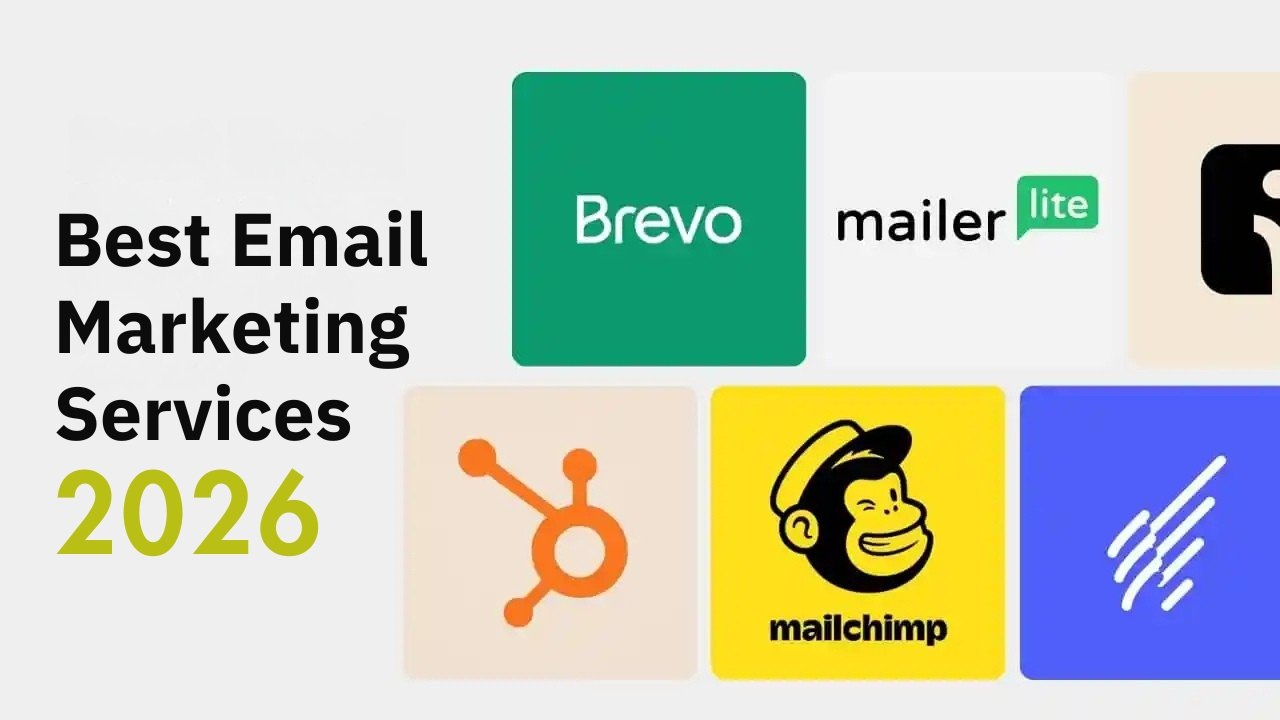
My Top 5 Platforms To Watch Out For
If you are in a rush, here is a snapshot of the top performers based on my recent testing.
| Platform Name | Best For | Starting Price | Key Feature |
| ActiveCampaign | Advanced Automation & B2B | ~$29/mo | Complex “If/Then” Automation Logic |
| Klaviyo | eCommerce (Shopify/Woo) | Free (up to 250 contacts) | Revenue-Tracking Analytics |
| MailerLite | Solopreneurs & Bloggers | Free (up to 12k emails) | Cleanest Interface & strict approval |
| Brevo | Budget & Transactional | Free (unlimited contacts) | Pay per email sent, not list size |
| HubSpot | Scaling Teams & Sales | Free Tools Available | Native CRM Integration |
Reviews of the Best Email Marketing Platforms 2026
Here is my detailed breakdown of the top 10 tools. I have evaluated these based on ease of use, feature depth, and value for money.
1. ActiveCampaign – The King of Automation
If you sell services, courses, or high-ticket B2B products, ActiveCampaign is widely considered the leader among the best email marketing platforms 2025.
Why I recommend it:
The power here lies in the automation builder. Most tools allow simple sequences, but ActiveCampaign allows for complex branching logic. For example, I can set a rule: “If the user clicks Link A, wait 2 hours, then send Email B. If they don’t click, send SMS C.” This level of granularity helps nurture leads effectively.
- Pros: Unmatched automation capabilities, built-in CRM, high deliverability due to strict compliance policies.
- Cons: The interface can be overwhelming for absolute beginners. It is not the cheapest option on this list.
- Verdict: The best choice for serious marketers who need granular control over the customer journey.
2. Klaviyo – The eCommerce Powerhouse
For anyone running a store on Shopify, WooCommerce, or Magento, Klaviyo is the industry standard. It focuses entirely on one metric: Revenue.
Why I recommend it:
Klaviyo connects deep into your store’s data. I can easily create a segment of people who “Bought red shoes in the last 30 days but didn’t buy socks.” This facilitates highly targeted upsells. In 2025, their AI predictive analytics can even estimate the “Expected Date of Next Order” for each customer.
- Pros: Tracks the exact dollar amount generated by each email. incredible pre-built “flows” (abandoned cart, browse abandonment).
- Cons: Pricing gets steep very quickly as your subscriber list grows.
- Verdict: Essential for eCommerce brands. If you sell products online, this is the tool you need.
3. MailerLite – The User Experience Champion
When small business owners ask me for a tool that is easy to use but still powerful, I point them to MailerLite. It consistently ranks high among the best email marketing platforms 2025 for usability.
Why I recommend it:
Their drag-and-drop editor is arguably the best in the business. It is fast, intuitive, and produces clean code that renders well in Gmail and Outlook. They also have a very strict approval process for new accounts. While annoying at first, this keeps spammers off their servers, ensuring your emails have a better chance of hitting the inbox.
- Pros: Generous free plan, landing page builder included, excellent 24/7 support.
- Cons: Automation is effective but simpler than ActiveCampaign.
- Verdict: Perfect for bloggers, authors, and small businesses starting out.
4. Brevo (formerly Sendinblue) – Best for Unlimited Contacts
Brevo flips the traditional pricing model. Instead of charging by the size of your list, they charge by the number of emails you send.
Why I recommend it:
This is ideal for businesses that have a massive list but only send newsletters once a month. It also unifies Email, SMS, and WhatsApp marketing in one dashboard. Their transactional email service (for password resets, order confirmations) is rock solid.
- Pros: Unlimited contacts on all plans. SMS integration. Great for transactional emails.
- Cons: The template builder can be slightly glitchy compared to MailerLite.
- Verdict: The cheapest email marketing software option for high-volume lists with low sending frequency.
5. HubSpot Marketing Hub – The All-in-One Solution
HubSpot is more than just email; it is a full ecosystem. It connects your marketing efforts directly to your sales team’s CRM.
Why I recommend it:
If you run an agency or a sales-heavy organization, the synergy is unbeatable. When a lead opens an email, your sales rep gets a notification instantly. The reporting is incredibly detailed, closing the loop between marketing efforts and closed deals.
- Pros: Seamless CRM integration, enterprise-grade security and support.
- Cons: The price jump from their “Starter” to “Professional” tier is astronomical.
- Verdict: Best for scaling teams where sales and marketing need to share data.
6. Kit (formerly ConvertKit) – Best for Creators
Rebranded as Kit, this platform is built specifically for the “Creator Economy” – bloggers, YouTubers, and podcasters.
Why I recommend it:
Kit prioritizes plain-text emails that look like they came from a friend, rather than a corporate brand. This often leads to higher engagement. Their “Creator Network” also allows you to recommend other newsletters and grow your list via cross-promotion.
- Pros: Excellent deliverability for text-based emails. Easy monetization tools.
- Cons: Design options are limited if you want visually heavy newsletters.
- Verdict: The top pick for influencers and personal brands.
7. GetResponse – The Funnel Builder
GetResponse has evolved into a complete online marketing suite. It includes webinar hosting and sales funnels alongside email.
Why I recommend it:
If you want to run a webinar and automate the follow-up sequence without buying separate tools, GetResponse handles it all. It is a solid middle-ground option.
- Pros: Webinar hosting included in higher plans. AI email generator.
- Cons: The interface feels a bit dated compared to modern competitors.
8. AWeber – The Reliable Veteran
AWeber has been around for decades. While they aren’t the flashiest, they are incredibly reliable.
Why I recommend it:
They have phone support, which is rare these days. Their integration with Canva allows you to design graphics directly inside the email builder.
- Pros: 24/7 support (including phone). Canva integration.
- Cons: Automation features lag behind ActiveCampaign and ConvertKit.
9. Moosend – The Budget-Friendly Contender
Moosend is a robust tool that often flies under the radar. It offers enterprise-level features at a fraction of the cost.
Why I recommend it:
You get advanced features like “weather-based recommendations” (selling umbrellas when it rains in the user’s location) at a very low price point.
- Pros: Very affordable. Advanced personalization features.
- Cons: Native integrations are fewer than the big players.
10. Constant Contact – Best for Event Management
A staple for local businesses and non-profits.
Why I recommend it:
It excels at event management. If you host fundraisers or local meetups, their invitation management features are integrated directly into the email platform.
- Pros: Easy event integration. Very beginner-friendly.
- Cons: Hard to cancel (you often have to call them). Limited automation.
How to Choose the Best Email Marketing Platforms for Your Business
Selecting a tool is not just about price; it is about technical fit. To rank as one of the best email marketing platforms 2025, a tool must support these three critical pillars:
- Deliverability & Authentication Support
Google requires bulk senders to have DKIM, SPF, and DMARC set up. If you don’t know what these are, you need a platform that guides you through the setup. I always look for platforms that provide a “dedicated IP” option for high-volume senders to protect sender reputation.
- Predictive Sending (AI)
Stop sending emails at 9:00 AM just because it’s convenient for you. Look for AI email marketing automation features that analyze when specific subscribers open their mail. If John reads at 8 PM and Sarah reads at 7 AM, the platform should hold the emails and release them individually at those times.
Conclusion
We have analyzed the data, tested the features, and looked at the pricing. Which tool should you choose?
- If you run an eCommerce store: Choose Klaviyo. The revenue tracking is worth the cost.
- If you need advanced funnels and B2B logic: Choose ActiveCampaign. It is the brain of your marketing operation.
- If you are a blogger or small business on a budget: Choose MailerLite. It is user-friendly, effective, and highly affordable.
The “best” platform is the one that actually lands in the inbox. In 2026, technical reliability beats fancy features every time.
Ready to scale your business?
Don’t let your marketing efforts go to the spam folder. Make a decision, migrate your list, and start engaging your audience properly.
End with a CTA to sign up to our newsletter via this link: https://gdacompany.com/newsletter/
Frequently Asked Questions About the Best Email Marketing Platforms 2026
What is the best free email marketing platform in 2026?
For most users, MailerLite and Brevo offer the best free tiers. MailerLite allows up to 12,000 monthly emails with access to automation. Brevo allows unlimited contacts but caps you at 300 emails per day.
Which email software has the best deliverability?
In my opinion and usage, ActiveCampaign and MailerLite consistently achieved the highest inbox placement rates. Their rigorous vetting of new clients prevents their shared IP addresses from being blacklisted.
Is email marketing still profitable?
Absolutely. With an ROI of 4200%, it remains the most effective channel for conversion. The shift in 2025 is toward hyper-personalization engines; generic blasts no longer work, but targeted sequences print money.
Can I use email marketing for affiliate products?
Yes, but proceed with caution. Platforms like Mailchimp are notoriously strict and may ban accounts for affiliate links. AWeber, GetResponse, and Kit are generally more affiliate-friendly, provided the content provides value and isn’t just spam.
What is the difference between single opt-in and double opt-in?
Single opt-in adds a subscriber immediately after they sign up. Double opt-in sends a confirmation email they must click. For 2026, I strongly recommend double opt-in. It filters out bots and fake emails, which protects your sender reputation and ensures your open rates remain high.